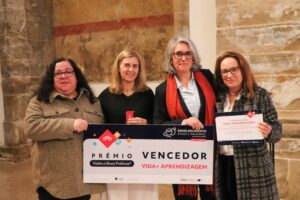
 The Entrepreneurship5.0 training programme, promoted by Instituto Pedro Nunes and Fundação Bissaya Barreto, won the Good Practices in Active and Healthy Ageing Award in the Centre Region, in the Life+Learning category.
 This award, which aims to enhance the recognition and dissemination of projects and initiatives that promote active and healthy ageing in the Centre region, is promoted by CCDR Centro in collaboration with the Ageing@coimbra and AgeINfuture consortia.
The Webinar is organized by Università di Bologna in collaboration with: ART-ER, Better Incubation, Fa’ la cosa giusta, Fondazione CRT, Fondazione Giacomo Brodolini, Inkubator Sežana, Politecnico di Torino.
The field of social entrepreneurship is various and complex. It includes multiple actors and it’s developing more and more. The webinar aims to give insights on this field, presenting recent research data about Europe and Italy. The data helps to depict a clearer situation, even if social entrepreneurship is still growing and constantly changing. After the first introductory contribution, the webinar focuses on specific cases and approaches which favour the development of social entrepreneurship. Specific approach to sustain social entrepreneurship are presented, such as the tight partnership of a public actor with social entrepreneurs and incubators, and policy recommendations on how to sustain inclusive incubation.
Afterwards, Italian and European actual cases of social enterprises are described and commented, in order to share with participants potentialities and criticalities of social entrepreneurship.
Agenda:
Introduction by Unibo
Social entrepreneurship and social ecosystems – Paolo Landoni, Politecnico di Torino
Key regional stakeholders for social innovation and social entrepreneurship – Kristian Mancinone, Art-ER, Chiara Davalli, EBN / Better Incubation
CASES OF SOCIAL ENTREPRENEURSHIP
• FabriQ (Italy) – Deborah Greco, Fondazione Giacomo Brodolini
• Inkubator Sežana (Slovenia) – Dorijan Marsic, Director of Incubator Sezana
• Case to be defined – Zoe McDonagh, Fondazione CRT,
• Si parte dal Bosco (Italy) – Piero Brunod, Fa la cosa giusta Network
Q&A: check on Miro blackboard whether participants interact and read out loud what they wrote + open the discussion in the call for questions and comments.
]]>Don’t worry! Recordings are now available online!
The series facilitated informal conversations between a diverse range of investors for impact and business support organisations with regards to pipeline building.
Switch Pitch with Seed Capital Bizkaia & Ship2B
In this episode of the Switch Pitch Series, Oscar Ugarte Gamboa, Seed Capital Bizkaia, and Xavier Pont Martin, Ship2B, explain how they work with incubators and accelerators – and how this collaboration can be improved to better support impact driven businesses.
Switch Pitch with Cartier Women’s Initiative
In this episode of the Switch Pitch Series, Wingee Sampaio, Cartier Women’s Initiative, explained how they work with incubators and accelerators – and how this collaboration can be improved to better support impact driven businesses.
Switch Pitch with Feelsgood Capital and Portus Buda Group FMC
In this episode of the Switch Pitch Series, Renata Brkic, FeelsGood Capital, and Elemér Eszter, Portus Buda Group FMC, explained how they work with incubators and accelerators – and how this collaboration can be improved to better support impact driven businesses.
Switch Pitch with World Startup
In this episode of the Switch Pitch Series, Jan Verkooijen, World Startup, explained how they work with incubators and accelerators – and how this collaboration can be improved to better support impact driven businesses.
Switch Pitch with INCO
In this episode of the Switch Pitch Series, Jean Michel Lecuyer, INCO, explained how they work with incubators and accelerators – and how this collaboration can be improved to better support impact driven businesses.
Switch Pitch with FASE
In this episode of the Switch Pitch Series, Markus Freiburg, FASE, explain how they work with incubators and accelerators – and how this collaboration can be improved to better support impact driven businesses.
]]>Back in October, over 80 international business support experts, thought leaders, and innovation practitioners gathered in Lipica, Slovenia, to explore the European innovation ecosystem’s untapped potential in becoming more inclusive and diverse and how to re-strategize, upskill and expand business support services to service a new generation of impactful start-ups. It was co-hosted by EU|BIC Inkubator Sežana and was powered by Better Incubation, a project funded by the European Union Programme for Employment and Social Innovation.
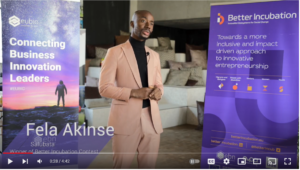
Don’t forget that you can still access all experts’ presentations and watch the event pictures here.
]]>
The Rise Challenge encourages applicants to create an individual project that demonstrates their talents and benefits their communities, and peer review other applicants’ projects, among other activities.
After applicants complete the Rise Challenge, Rise selects up to 500 Finalists to advance to “Finalist Days,” where they demonstrate their motivations, problem-solving abilities, and teamwork skills in an innovative interview format.
From the 500 Finalists, Rise selects up to 100 Global Winners to receive various benefits as they work to serve others.
The program starts at ages 15–17 and offers a lifetime of benefits including scholarships, mentorship, access to career development opportunities, funding, and more as Global Winners work toward solving humanity’s most pressing problems. Everyone who applies joins a global community of leaders and gains access to free online courses and opportunities from our partners around the world.
The program is personalized and flexible, tailored to Global Winners’ needs as they evolve over time. We aim to provide Global Winners with individualized support to empower them to achieve their goals while they work to serve others throughout their lives.
Applicants for the 2023 cohort must be between the ages of 15 and 17 as of July 1, 2023, meaning they are born on or between July 2, 2005 and July 1, 2008.
It does not matter what country they live in, background they come from, or academic experience they have. Whether they are interested in science, innovation, technology, art, policy, community organizing, or any other discipline—we want to hear from them.
Rise is a program that finds brilliant people who need opportunity and supports them as they work to serve others. We understand that economic barriers are not the only challenges that keep brilliant people from serving others throughout their lives.
Discover more about the Rise Challenge and apply now!
Rise is an initiative of EVPA member Schmidt Futures with the Rhodes Trust
]]>- Better Incubation final event at EVPA Annual Conference 2022
- Better Incubation latest publications: the Better Incubation Roadmap, the Insights Paper, and the Final Policy Recommendations – including the 15 regional manifestos summarising the key outcomes of the regional policy workshops that took place in September and October 2022 in 14 European countries.
- Better Incubation highlights for the 5 target groups of underrepresented entrepreneurs: factsheets, videos and training modules.
Find out more information about Better Incubation news by reading the newsletter here: Better Incubation Newsletter 8_December 2022
]]>The Commission calls on Member States to encourage mainstream business incubators to extend their support to social economy entities, to improve business investment readiness support opportunities. The ‘Better Incubator’ pilot launched by the European Commission can serve as inspiration.
The final objective of Better Incubation is to kick-start an “eco-systemic” change by bringing incubation and business support services closer to society and contributing to societal needs through entrepreneurship and self-employment based on job creation, skills development, and provision of opportunities for unemployed and vulnerable people to fully participate in the society and economy.
To achieve this goal, BSOs are called to act in synergy with the wider entrepreneurial ecosystem, as individual business incubators are not going to be able to change the culture and institutional practices around social and inclusive entrepreneurship alone.
Besides focusing on the internal capacities of BSOs, the Better Incubation project approach is also outward-looking to the wider ecosystem, considering broader cultural and institutional change needed to meet the objectives stated above.
This report presents the key findings resulting from the work carried out by the Better Incubation Consortium over the last 2 years and involving several European stakeholders in a series of learning, experimentation, and reflection activities on the role mainstream BSOs can play in better promoting and supporting social and inclusive entrepreneurship in Europe and beyond.
Download it here: D2.3_Better Incubation_Policy Recommendations_Edit
Based on the insights from the preliminary research on existing inclusive incubation practices, the learnings from the 21 Better Incubation pilots, offering incubation services to more than 130 entrepreneurs/would-be entrepreneurs in 19 EaSI countries, and the existing recommendations in the Better Entrepreneurship Policy Tool and EU policies, CoPs elaborated policy recommendations.
Better Incubation Policy Recommendations were validated and enriched during 15 regional policy workshops that involved more than 260 stakeholders in 14 European countries. These discussions resulted in 15 regional policy manifestos highlighting regional priorities and steps needed to better promote and support social and inclusive entrepreneurship in those territories and ecosystems. These are available at the end of this document.
Following an in depth discussion with the Better Incubation Advisory Board members (ENSIE, Cooperatives Europe, Caritas Europa, EMES), a final validation was performed in Brussels on December 2nd, 2022, during the Better Incubation EU Policy Workshop, that saw the active participation of 22 stakeholders representing European policy makers, researchers, regional and national public authorities, investors, incubators, entrepreneurs, social actors, and non-governmental organisations contributing to the European social and inclusive entrepreneurship ecosystem.
We are now glad to release the Better Incubation Policy Recommendations, a set of reflections and ideas aimed at providing some inspiration for BSOs and other stakeholders to work together towards a more inclusive and impact-driven entrepreneurship ecosystem across Europe.
We recommend reading the Better Incubation key publications to get more details about these findings and the background information informing these final recommendations:
]]>The Lebanese economy needs more than ever a productive private sector capable of driving economic recovery, create jobs, and support a fragile balance of payment by producing local goods and services, increasing exports and diversify export markets.
In this context, the WOMEN ECONOMIC EMPOWERMENT FOR LEBANON PROJECT (WEEL) aims at Supporting Women-Owned And Women-Led Businesses In Lebanon by providing between 8 and 20 MSMEs and startups with grants that vary from 15,000 to 50,000 Euros to be used for expending investments, covering expenditures and getting technical assistance.
This project is part of a larger programme, the EU for Women Empowerment (EU4WE), a 42-month programme (October 2019 – March 2023) funded by the European Union and implemented by Expertise France. It aims at promoting full and unconditional equality between men and women in Lebanon. The specific purpose of EU4WE is to reduce gender-based violence through women’s empowerment and enhance existing institutional mechanisms working towards gender equality.
]]>This time, with the support of DG EMPL, we focussed the conversation on the available funding instruments for social economy and the role the National and European Competence Centres for Social Innovation have in Europe to promote and enable impact-driven innovation.
00_Better Incubation SEAP Webinar 2_13 December 2022_Chiara Davalli
Dana Verbal, DG EMPL, provided a comprehensive overview of the available funding programmes. She touched upon the following ones: ESF+, ERDF, InvestEU and the Social Inclusive Finance Technical Assistance. She highlighted relevant funding streams for BSOs and incubators.
She also mentioned the Social Economy Gateway, that as of Summer 2023, will act as the main information point about EU funding programmes, EU policy, guidance documents and studies, facts and figures, best practice examples, links to relevant networks and organisations and capacity building resources such as webinars. It will also include country pages to provide country specific information.
01_2022-12-13 SEAP_ Better incubation webinar_Dana VERBAL OK
Risto Ravio, DG EMPL, presented the comprehensive framework for social innovation defined by ESF+ and explained the role the national competence centres for social innovation will have in promoting and enabling social innovation across Europe. As also mentioned in the previous presentation, many funding programmes for social economy and social innovation are run by regional and national managing authorities, so it is important to create the right environment to generate appropriate impact. As European Member States present different maturity levels in this regard, 6 international consortia have been funded for the period 2021-2023 to support the creation of the national cometence centres through international collaboration, mutual learningn aand capacity building.
02_Social Innovation competence centres 13 Dec 2022_Risto Ravio
The webinar closed with a presentation dedicated to FUSE project, one of the 6 networks of national competence centres for social innovation covering the following countries: Portugal, Ireland, Bulgaria and Cyprus.
Grainne Smith, GENIO Ireland, presented the consortium and briefly showed where the different countries are in the definition of the national blue prints/agendas for social innovation
03_FUSE overview__IR PT_better incubation WK_13.12.2022_Grainne Smith
If you missed the webinar, you can watch the recordings here.
]]>
During the closing session of the final event of Better Incubation at the EVPA Annual Conference 2022, we asked the Better Incubation project managers of IHUB, EVPA and EBN to summarise their project experience in one word.
Lucia Radu, IHUB, highlighted the intense capacity building programme offered by Better Incubation through the Communities of Practice and the online Training Courses on Social Entrepreneurship, Inclusive Etrepreneurship and Impact Management and Measurement. More than a training opportunity, rather a dedicated space for BSOs to learn from peers and other relevant stakeholders committed to promote and support entrepreneurship as an opportunity for all in society – especially among the so-called Underrepresented and Vulnerable Groups.
Valeria Balzarini, EVPA, used the word perspective to explain how EVPA and its members used the Better Incubation project to rethink their approach to Underrepresented Entrepreneurs (UREs), this by connecting and working with BSOs and UREs directly.
Chiara Davalli, EBN, stressed the importance of Networks, of a Network of Networks like Better Incubation to achieve so many important results over a relatively short period of 2 years, where more than 133 entrepreneurs and would-be entrepreneurs from URGs received incubation programmes from 21 organisations in 14 European countries. EBN, IHUB and EVPA, with the support and advice of Caritas Europa, ENSIE, EMES, Cooperatives Europe, managed to mobilise the European entrepreneurial ecosystem thanks to the active engagement of their members (EU|BICs, Impact Hubs and invesotrs for impact) who took this opportunity to rethink their programmes, their organisations and their ecosystems in a more inclusive and impact-driven way.
The event started in the morning with an EU Policy Workshop aimed at sharing and validating Better Incubation Policy Recommendations with policymakers, researchers, BSOs, investors for impact, regional development agencies, national agencies for social innovation and pan-European networks like Eurocities and Euclid. An interactive workshop where 25+ participants where asked to discuss the 6 issues identified by the project as the ones the entrepreneural ecosystem(s) in Europe need to consider and address to boost social and inclusive entrepreneurship in Europe.
Some of these policy recommendations were taken into account by Mrs Brigitte Fellahi-Brugneau, Head of Unit at DG Employment, that during the afternoon session shared some reflections from the policymakers’ point of view on how Better Incubation contributed to promote and support social and inclusive entrepreneurship in Europe, by leveraging the knowledge, the competencies, the networks of mainstream business support organisations.
Then it was the turn of the Directors and Managers representing EVPA, IHUB and EBN who shared some insights on the relevance of the Better Incubation programme for their communities.
They all agreed that as organisations, the project offered a unique opportunity to grow knowledge, tools and methodologies for BSOs and investors for impact willing to broaden their scope to social and inclusive entrepreneurship. Moreover, Better Incubation enabled the three networks to involve their members and let them cooperate directly, this leading to new partnerships, opportunities and wider impact.
The event continued with the VOICES of Better Incubation: seven “ah-ah moments” telling the stories of EU|BICs, Impact Hubs, Investors for Impact and other stakeholders involved in the project activities. Regional policy workshops’ organisers, inclusive incubation programmes managers, CoPs experts and facilitators, trainings and networking events’ participants, investors mentoring winners of the Better Incubation Contest, Scaling Impact. These the perspectives represented in this crowded and emotional panel, a conversation that showed how Better Incubation successfully managed to kick-start an ecosystemic change in the incubation ecosystem.
Last but not least, the winners of the Better Incubation Contest were on stage to share how the scaling programme of Better Incubation project is helping them understanding and moving the first steps into new markets in Europe.
Believe, dare, learn and amplify your impact without giving up! This in a nutshell their advice to would-be entrepreneurs!
It was a great conclusion of two years of intense project activities. You can still watch the Better Incubation Project Finale recordings online!
]]>The Commission calls on Member States to encourage mainstream business incubators to extend their support to social economy entities, to improve business investment readiness support opportunities. The ‘Better Incubator’ pilot launched by the European Commission can serve as inspiration’ .
Better Incubation aims to enhance the inclusiveness of BSOs by stimulating a wider cultural change in the incubation ecosystem, therefore involving regional and EU stakeholders (investors, policymakers, social actors, BSOs) that can contribute to this paradigm shift.
After 2 years of project activities, it is time to share key learnings on how to boost the promotion and support of impact-driven and inclusive entrepreneurial ecosystems in Europe and beyond.
Organised in the framework of the EVPA Annual Conference 2022, the session “Better Incubation: Project Finale | Towards an impact-driven and inclusive approach to innovative entrepreneurship in Europe” is structured in 4 key moments:
- How BSOs can contribute to the implementation of the Social Economy Action Plan? Brigitte Fellahi-Brognaux, Head of Unit, European Commission DG EMPL
- Beyond Better Incubation – Partner Networks’ reflections on the way forward A conversation with Tatiana Glad, IHUB; Roberta Bosurgi, EVPA ; Laura Lecci, EBN
- “Voices of Better Incubation” We’ll hear different experiences of Better Incubation. What did the programme offer to their orgnisations, their territories and communities? What are the plans for the future?
- Scaling Impact. Meet the Winners of the Better Incubation Contest 2022. We’ll discover the entrepreneurial journey of the three finalists of the Better Incubation Contest 2022| Scaling Impact. Their stories, their plans, their impact
The session starts at 14.30 CET and it is going to be live streamed on Better Incubation Twitter account, LinkedIn page and EBN YouTube Channel.
AGENDA
Room Orangerie, on the 2nd floor & Live Streaming
| 14:30-14:40 | Welcome and introduction about Better Incubation, Chiara Davalli, EBN |
| 14.40-15.10
|
How BSOs can contribute to the implementation of the Social Economy Action Plan?
Brigitte Fellahi-Brognaux, Head of Unit, European Commission DG EMPL Beyond Better Incubation – Partner Networks’ reflections on the way forward A conversation with Tatiana Glad, IHUB; Alessia Gianoncelli, EVPA ; Laura Lecci, EBN |
| 15.10-15.30 | “Voices of Better Incubation” moderated by Lucia Radu, Impact Hub
We’ll hear different experiences of Better Incubation. What did the programme offer to their orgnisations, their territories and communities? What are the plans for the future?
|
| 15.30-15.50 | Scaling Impact. Meet the Winners of the Better Incubation Contest 2022, moderated by Laura Lecci, EBN
We’ll discover the entrepreneurial journey of the three finalists of the Better Incubation Contest 2022| Scaling Impact. Their stories, their plans, their impact.
|
| 15.50-16.00 | Closing session with the three partner networks |
]]>
The upcoming WEgate webinar (on 24 November on Zoom) will focus on a series of initiatives that support the skilling process for women in business.
They will be presenting three good practices for skills development:
- DITA – Innovative platform for supporting your digital transformation, presented by Loredana Flego, NeroSuBianco
- TalentA – education and support programme for women farmers, presented by Margit Batthyány-Schmidt, Union of Hungarian Women
- National Platform for Women Entrepreneurship – connecting & empowering women entrepreneurs and stakeholders, presented by Emilija Andonova, Foundation for Management and Industrial Research
| REGISTRATION LINK |
Have a look to the Better Incubation Community of Practice on Women Entreprenurship for more info and details on the topic.